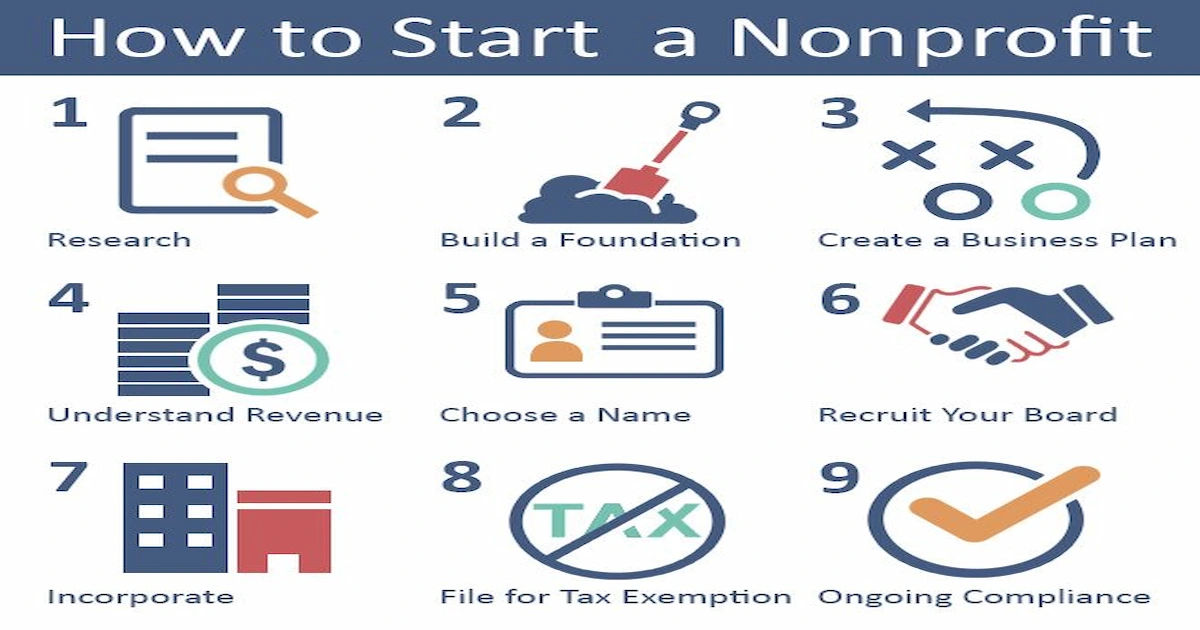
How to Start a Nonprofit Organization comes down to five moves: define a mission, form a board, incorporate in your state, get an EIN, and apply to the IRS for tax-exempt status. That sequence is the backbone. Everything else, from bylaws to fundraising plans, hangs off it.
This guide walks through each step in order, covers the mistakes that stall new organizations, and explains where outside help pays for itself. The process below follows U.S. rules. NGOs elsewhere will need to check their own country’s registration requirements.
What Is a Nonprofit Organization?
A nonprofit organization is a legal entity that exists to serve a public or member benefit rather than to distribute profit to owners. It can earn revenue and pay staff. What it can’t do is pay surplus income out to shareholders or founders. Any surplus goes back into the mission.
The most common type in the U.S. is the 501(c)(3) charity, which covers educational, religious, charitable, and scientific work. Schools, food banks, and community health groups usually fall here.
Profit Organizations and Nonprofit Organizations: The Real Differences
| Factor | For-Profit | Nonprofit |
| Purpose | Generate returns for owners | Advance a mission |
| Surplus income | Distributed to owners | Reinvested in programs |
| Ownership | Shareholders or founders | No owners; governed by a board |
| Tax status | Taxed on profit | Often exempt from federal income tax |
| Funding | Sales, investors | Donations, grants, program revenue |
A local bakery is a for-profit business. A community kitchen that trains people for culinary jobs and reinvests all revenue into training is a nonprofit. Both can sell food. The difference is where the money goes.
Test Your Idea Before You File Anything
Start with a need, not a form. Ask who you serve, what gap exists, and who else already fills it.
Search the field first. The IRS Tax Exempt Organization Search and Candid (formerly GuideStar) let you look up existing organizations by name, location, and cause. This is also how to find a nonprofit organization doing similar work. If three groups already serve your population in your county, partnering or joining one may beat launching a fourth.
Write a Mission Statement and a Simple Plan
Keep the mission to one or two sentences. Then draft a short plan covering programs, target population, first-year budget, and funding sources.
Funders and the IRS both want specifics. “Support at-risk youth” is vague. “Provide after-school tutoring to 60 middle schoolers in two underserved districts” is fundable.
Choose a Name and Check Availability
Search your state’s business registry, the federal trademark database, and domain names. Pick a name that is distinct and tied to your work. Reserve it with your state if a reservation is offered.
Put Together Your Board of Directors
Most states require at least three directors, but some states allow fewer. Select people with different skills: financial, legal, program skills and community connections.
Avoid stacking the board with relatives. The IRS looks at independence, and conflicts of interest can create trouble later.
Incorporate in Your State
File articles of incorporation with your state’s filing office. Requirements vary, but the document typically includes:
· The organization’s name and address
· A statement of purpose
· A dissolution clause directing remaining assets to another exempt organization
· A registered agent
The dissolution clause matters. The IRS expects it for 501(c)(3) status, so include it from day one.
Adopt Bylaws and Hold First Board Meeting
Your bylaws are your internal rules: how directors are elected, how often the board meets, how votes are taken, and how conflicts of interest are handled. Adopt bylaws, elect officers, adopt a conflict-of-interest policy, and authorize application for an EIN at the first meeting. Record all of it in minutes.
Get an EIN
An Employer Identification Number works like a Social Security number for your organization. You need it to open a bank account, hire staff, and file with the IRS. Applying through the IRS website is free.
Apply for Federal Tax-Exempt Status
Most charities file Form 1023 with the IRS. Smaller organizations may qualify for the shorter Form 1023-EZ if projected gross receipts and assets fall below IRS limits. Filing fees apply and the IRS adjusts them, so confirm current amounts and eligibility on IRS.gov before you submit.
Be thorough. Describe your programs in plain, concrete terms, and make sure your financial projections match your narrative. Mismatches trigger follow-up questions that add weeks or months.
If you want to form a nonprofit association (eg a trade association or a membership organization) rather than a charity, you may be eligible as a different kind of organization (eg 501(c)(6)). The filing path is different so make sure you know which category fits your purpose before you apply.
Register for Charitable Solicitation and Open the Books
Many states require registration before you ask the public for donations. Check your state attorney general or secretary of state website. Then open a dedicated bank account, set up bookkeeping, and track restricted versus unrestricted funds from the first dollar.
A List of Nonprofit Organizations by Type
Seeing how existing groups operate helps you model your own. A short list of nonprofit organizations across sectors:
· Humanitarian: American Red Cross, Doctors Without Borders
· Housing: Habitat for Humanity
· Education: Local school foundations, parent-teacher organizations, scholarship funds
· Community: Food banks, shelters, neighborhood associations
· Arts and culture: Community theaters, museums, music education programs
Search your own region and cause area the same way. The patterns in governance, programs, and fundraising are instructive.
Mistakes That Slow New Nonprofits Down
Skipping the funding plan. Tax-exempt status doesn’t bring in money. Build a diversified revenue plan before launch.
Treating the IRS application as a formality. The most frequent cause of delays is vague program descriptions.
Compliance after approval ignored. Annual Form 990 filings are required, and missing them for three consecutive years can revoke your status.
Going it alone. If you want to operate before approval, fiscal sponsorship lets an established nonprofit receive funds on your behalf while you build.
Your Next Steps
Don’t try to do all nine steps this week. Do these three:
1. Search existing organizations in your cause area and document the gap you fill.
2. Draft your one-sentence mission and recruit three board candidates.
3. Pull your state’s incorporation requirements and the current IRS Form 1023 instructions.
Setting up a nonprofit involves legal, financial, and fundraising decisions that compound. A good consultant helps you avoid the expensive ones. Schedule a consultation with JBK Fundraising Consultants to map your launch plan, or explore our services to see how we support nonprofit agencies, NGOs, and schools from formation through fundraising.