The best fundraising ideas for nonprofit organizations share one trait: they ask a specific group of people to fund a specific outcome. A “help us reach our goal” appeal rarely works. “$ 50 feeds a family for a week”.
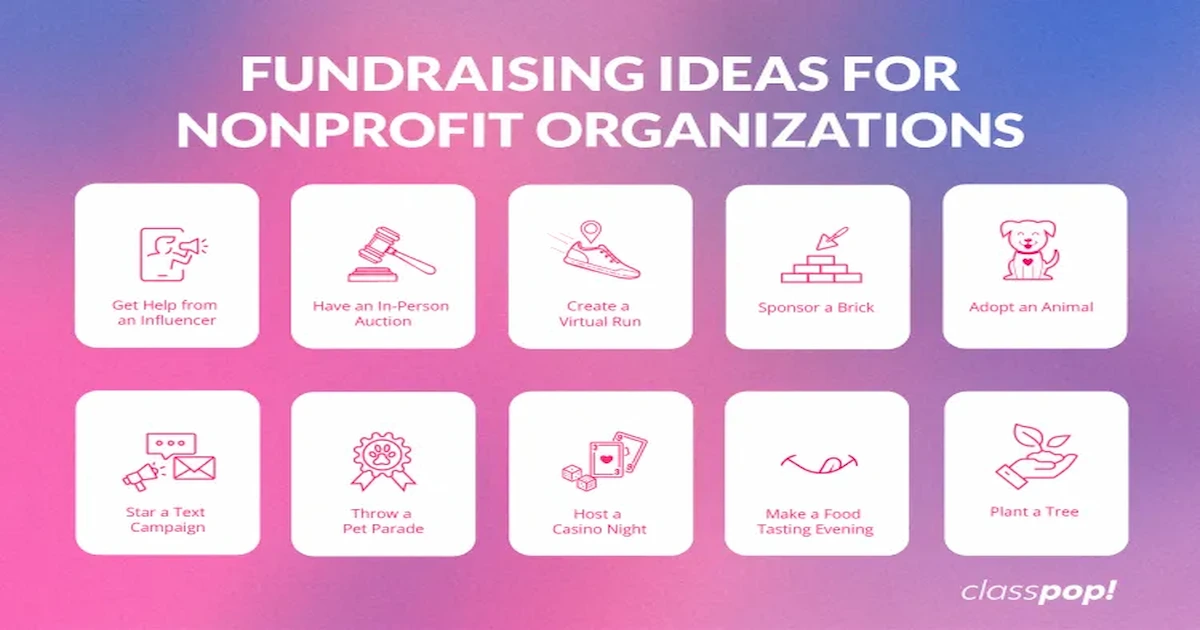
This guide covers ten ideas that work for nonprofits, NGOs, and schools. Each comes with setup effort, typical timelines, and the mechanics that decide whether it succeeds.
Match the Idea to Your Capacity First
Most failed campaigns fail on fit, not creativity. A three-person team cannot run a gala, and a school PTA with no donor list should not start with major gifts.
Check three things before you commit:
- Staff and volunteer hours. Count the hours you can actually protect, not the ones you hope for.
- Existing audience. Email subscribers, past donors, parents, and local businesses are your fastest path to revenue.
- Time to cash. A peer-to-peer campaign can close in 30 days. A corporate sponsorship pipeline often takes a quarter.
According to Giving USA, individuals account for roughly two-thirds of charitable giving in the U.S. Build around people first, and treat foundations and corporations as a second layer.
Fundraising Ideas for Nonprofit Organizations, Sorted by Effort
Low effort, fast return
1. Monthly giving program. Recurring donors give more over time and leave less often than one-time donors. Name the program after what it funds, such as “The Weekly Meal Club,” and show donors what $15 a month delivers.
2. Year-end email series. Send three to five emails between late November and December 31. Open with a story, follow with the need, and close with a deadline. Most nonprofits send one email and wonder why the results are thin.
3. Matching gift challenge. Ask one board member or local business to match donations up to a set amount. A match gives people a reason to act now instead of “someday.”
4. Social media giving day. Pick one 24-hour window. Post a goal tracker, share two donor stories, and thank people publicly as gifts arrive.
Medium effort, strong community return
5. Peer-to-peer campaigns. Supporters create personal fundraising pages and ask their own networks. You gain access to donors you could never reach directly. Recruit 15 to 30 ambassadors and give each a ready-made email and social post.
6. Restaurant and retail nights. A local restaurant donates 15 to 20 percent of sales on a set evening. It costs you almost nothing, and it works best when you promote it to your own list a week ahead.
7. Charity run or walk. Registration fees cover costs, and participant fundraising generates the profit. Schools and youth organizations do especially well here because families bring their own networks.
Higher effort, higher ceiling
8. Benefit dinner or auction. Expect real returns and real overhead. Secure corporate table sponsors before you sell a single ticket so the event is profitable from day one.
9. Corporate sponsorship packages. Offer three tiers with clear visibility benefits, such as logo placement, event naming, and newsletter features. Pitch local employers first; they care about community goodwill.
10. Major donor cultivation. Identify your top 20 supporters and meet them personally. One well-prepared conversation can outperform a month of mass email.
Quick Comparison
| Idea | Setup Time | Typical Cost | Best For |
|---|---|---|---|
| Monthly giving | 2–3 weeks | Low | Any nonprofit with a donor list |
| Year-end emails | 1–2 weeks | Very low | Organizations with 500+ contacts |
| Matching challenge | 1 week | Very low | Teams with a board or business ally |
| Peer-to-peer | 4–6 weeks | Low–medium | Schools, NGOs with active volunteers |
| Charity run/walk | 8–12 weeks | Medium | Youth and community groups |
| Benefit dinner | 3–6 months | High | Established donor bases |
| Corporate sponsorship | 2–4 months | Low | Organizations with local visibility |
What Makes Any Fundraiser Perform Better
The idea matters less than the execution. Four habits separate campaigns that hit their goals from those that stall.
Set one clear goal with a deadline. “Raise $12,000 by March 31 to fund 40 scholarships” gives donors a finish line. Vague goals produce vague giving.
Tell one story, not ten. Pick a single beneficiary or project and make it concrete. Specific details raise emotional response more than statistics do.
Make giving take under a minute. Test your donation page on a phone. If it requires an account, more than five fields, or a PDF download, you are losing donors.
Thank people within 48 hours. A personal, specific thank-you email builds the relationship that produces the second gift. Most donor attrition starts with silence after the first.
If retention is your weak spot, our donor retention strategies guide walks through a simple follow-up sequence.
Mistakes That Quietly Drain Results
Running too many campaigns at once splits your attention and confuses your audience. Pick one major initiative per quarter and support it with smaller touches.
Ignoring costs is the other common trap. A gala that grosses $20,000 but costs $14,000 is a weaker return than a $6,000 email campaign that costs you $200.
Track cost per dollar raised for every effort. Over a year, that single number tells you where your hours belong.
Your Next 30 Days
Start small and build momentum:
- Week 1: Audit your donor list, email open rates, and volunteer capacity.
- Week 2: Choose one low-effort idea and one medium-effort idea from the list above.
- Week 3: Draft your goal, your story, and your donation page. Recruit a match donor if you can.
- Week 4: Launch, track daily, and thank every donor within two days.
Not sure which approach fits your organization’s size, audience, and budget? Schedule a consultation, and we will map a fundraising plan to your goals, your team, and your calendar.